The Problem Beneath Your Floors
For many Virginia homeowners, the crawlspace is out of sight and out of mind—until moisture, mold, or pests become a costly surprise. Traditional vented crawlspaces were once considered standard, but with our region’s humid climate and heavy rainfall, that old-fashioned method often does more harm than good.
At Rozier Moisture Control & Waterproofing, we’ve helped countless homeowners in South Hill, VA, and surrounding areas transform damp, musty crawlspaces into clean, dry, and energy-efficient environments through professional crawlspace encapsulation.
In this article, we’ll break down the key differences between venting and encapsulation, why it matters, and how to choose the best option for your home.
The Traditional Approach: Vented Crawlspaces
For decades, homes across Virginia were built with open vents in the foundation to allow airflow. The theory was simple—ventilation would prevent moisture buildup. Unfortunately, the reality in our humid climate is quite the opposite.
The Problem with Vented Crawlspaces
- Moist air enters easily: Instead of drying out the crawlspace, vents allow warm, moist air inside—especially during summer.
- Condensation forms on surfaces: When humid air meets cooler subfloor or ductwork, it turns to water droplets, soaking insulation and wood.
- Mold and mildew thrive: The damp environment is perfect for fungal growth.
- Energy loss increases: Air leakage causes HVAC systems to work harder, raising energy bills.
- Termites and pests move in: Moist wood attracts termites, carpenter ants, and other unwanted guests.
In short: Vented crawlspaces invite moisture instead of controlling it.
The Modern Solution: Crawlspace Encapsulation
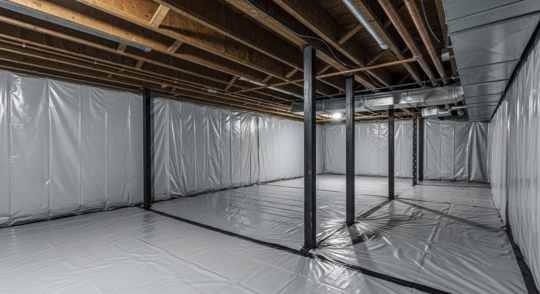
Crawlspace encapsulation is the process of completely sealing your crawlspace from outside air and ground moisture using vapor barriers, insulation, and dehumidification systems.
This modern, science-backed approach keeps your crawlspace—and your home—clean, dry, and protected year-round.
How Crawlspace Encapsulation Works
- Moisture Barrier Installation: Heavy-duty polyethylene sheeting is applied to the floors, walls, and piers to block ground moisture.
- Air Sealing: Foundation vents, cracks, and gaps are sealed to prevent humid air intrusion.
- Insulation & Thermal Protection: Insulating the walls helps regulate temperature and energy efficiency.
- Dehumidifier Installation: A high-capacity dehumidifier maintains ideal humidity levels below 60%.
- Optional Sump Pump or Drainage: For high-water tables or flooding risk, we install drainage systems for full waterproofing.
When performed by certified professionals like Rozier Moisture Control, encapsulation provides a permanent, low-maintenance solution for moisture, mold, and pests.
Encapsulation vs. Venting: Head-to-Head Comparison
| Feature | Crawlspace Venting | Crawlspace Encapsulation |
|---|---|---|
| Moisture Control | Allows humidity in | Seals out moisture completely |
| Mold Prevention | Encourages mold growth | Prevents mold and mildew |
| Energy Efficiency | Wastes heating/cooling | Improves efficiency up to 20% |
| Pest Protection | Attracts termites and rodents | Creates pest-resistant environment |
| Indoor Air Quality | Poor—musty odors and allergens | Clean, filtered, and healthy |
| Home Value | May decrease | Increases resale value |
| Maintenance | Requires ongoing monitoring | Low maintenance, long-lasting |
Top Benefits of Crawlspace Encapsulation for Virginia Homes
1. Superior Moisture Protection
By sealing the crawlspace from outside air and groundwater, encapsulation eliminates the main source of moisture-related damage—including rot, mold, and wood decay.
2. Healthier Indoor Air
Nearly 50% of the air inside your home comes from the crawlspace. A sealed, dry crawlspace reduces airborne allergens, mold spores, and musty odors.
3. Energy Savings
Your HVAC system won’t need to fight against humid air. Encapsulation can reduce energy costs by 15–20% annually.
4. Pest and Termite Prevention
Dry, sealed crawlspaces remove the damp conditions that attract termites, ants, and rodents. Combine encapsulation with Rozier Pest & Termite Control’s inspection services for complete home protection.
5. Extended Structural Life
Moisture is the #1 cause of wood rot and foundation deterioration. Encapsulation helps your home last decades longer—without costly repairs.
Why Virginia’s Climate Demands Encapsulation
Homes in South Hill, VA, and nearby counties experience extreme humidity, heavy rainfall, and seasonal temperature swings. These conditions create the perfect breeding ground for mold, pests, and wood decay under vented crawlspaces.
Encapsulation is not just a luxury—it’s a necessity for long-term protection against our region’s unique environmental challenges.
The Rozier Moisture Control Advantage
When you choose Rozier Moisture Control & Waterproofing, you’re getting more than a quick fix—you’re getting a permanent solution designed for Virginia homes.
Our Services Include:
- Comprehensive crawlspace inspections
- Custom moisture and waterproofing systems
- Vapor barrier installation
- Dehumidifiers and sump pumps
- Termite prevention partnerships with Rozier Pest & Termite Control
- Long-term warranties and service plans
Our technicians are trained to identify the root causes of moisture and design solutions that keep your crawlspace healthy and dry for decades.
How Much Does Crawlspace Encapsulation Cost?
While the cost depends on size, condition, and materials, most Virginia homeowners can expect encapsulation to range between $4,000 and $10,000.
However, it’s important to see encapsulation as an investment, not an expense. The savings in energy efficiency, pest prevention, and avoided structural damage often outweigh the upfront cost within a few years.
Crawlspace Encapsulation FAQs
Q: Will encapsulation make my home smell better?
A: Yes. By removing mold and sealing out musty odors, encapsulation noticeably improves indoor air quality.
Q: Do I still need crawlspace vents after encapsulation?
A: No. All vents are sealed to prevent humidity and outdoor air from entering.
Q: How long does encapsulation last?
A: With proper installation and maintenance, a high-quality system can last 20+ years.
Q: Can I encapsulate my crawlspace myself?
A: DIY encapsulation often fails because of improper sealing or material choice. Professional installation ensures long-term effectiveness and warranty coverage.
Get a Free Crawlspace Inspection in South Hill, VA
Don’t let moisture and mold threaten your home’s safety, air quality, or value. Contact Rozier Moisture Control & Waterproofing today to schedule a free crawlspace inspection anywhere within a 50-mile radius of South Hill, VA.
Our team will evaluate your crawlspace, identify problem areas, and design a custom encapsulation system that protects your home from the ground up.
Call Rozier Moisture Control & Waterproofing or request your free estimate online.
Your home deserves a dry, healthy foundation—let’s make it happen.
The post Crawlspace Encapsulation: Which Is Right for Your Home? appeared first on Rozier Termite & Pest Control, Inc. | Rozier Moisture Control & Waterproofing.