
Getting rid of German cockroaches usually comes down to baiting the places they hide, not spraying the places you see them. They are the small tan roaches found in kitchens and bathrooms, and they breed indoors all year. Ordinary sprays often disappoint because the insects and their eggs spend most of their time inside walls, cabinets and appliances, where spray seldom reaches.
This post covers how to recognize German cockroaches, why they can be harder to clear than other roaches, what tends to work, and what is often a waste of money.
What Do German Cockroaches Look Like?
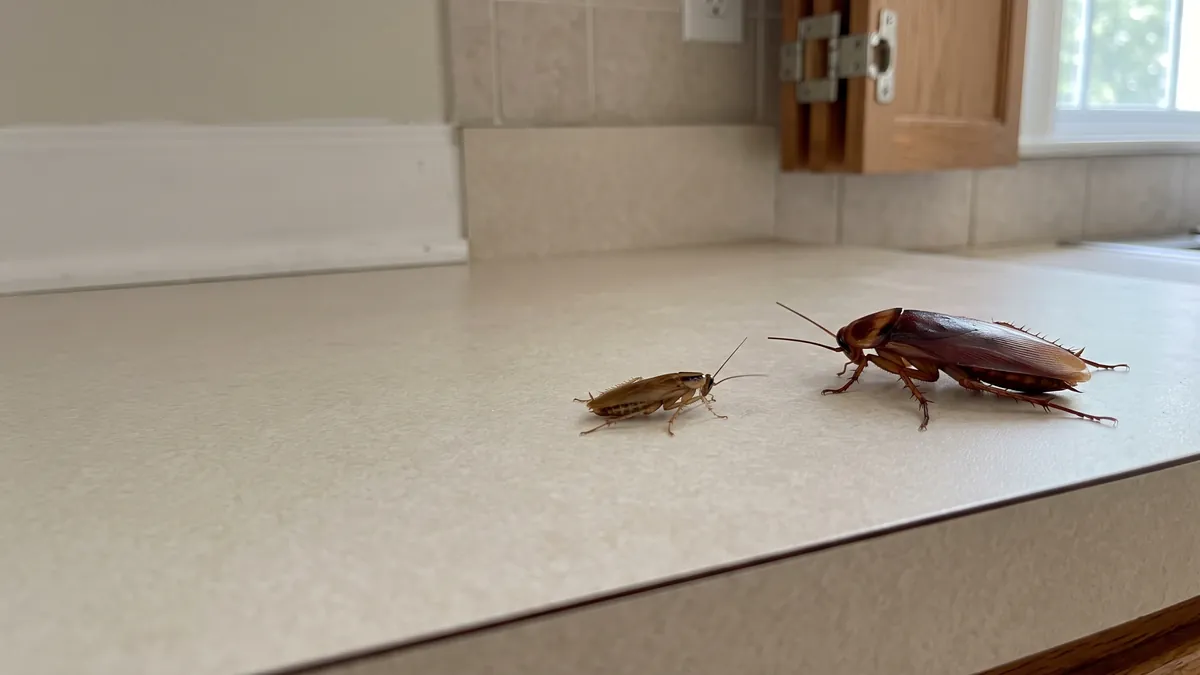
German cockroaches are small. Adults reach about half an inch, they are light brown to tan, and they have two dark stripes running back from the head. Young ones are darker, almost black, and the same stripes may show faintly.
Two habits help set them apart from the larger roaches you might find in a crawl space or a garage.
- They live indoors. German cockroaches stay in heated buildings all year and usually do poorly outdoors in our climate. Finding them generally means they are breeding inside.
- They stay near food and water. Look in kitchens and bathrooms, often close to a sink, a dishwasher, a coffee maker or a pet bowl.
The large dark roaches people often call water bugs are usually a different species that comes in from outside. They matter too, but they are a separate problem.
Why Are German Cockroaches Harder to Get Rid of Than Other Roaches?
Three parts of their biology explain many failed attempts.
- The eggs are protected. A female carries her egg case with her until it is nearly ready to hatch, and each case holds dozens of eggs. Spray usually cannot reach eggs inside a case that is riding on an insect in hiding. A treatment can kill the roaches you saw and still leave the next batch on the way.
- They live inside the gaps. By day they tend to sit in spaces you cannot easily reach: behind and under the dishwasher, inside the refrigerator’s motor housing, in cabinet hinges and corners, around pipe holes under the sink, or behind a wall switch plate. Spray on a counter or baseboard mostly treats a place they walk across.
- They breed all year indoors. Warmth, food and water are there in every season, so the numbers seldom drop on their own.
What Attracts German Cockroaches to a Kitchen?
They need very little, which is why clean kitchens can get them too.
- Water, such as a slow drip under a sink, condensation on a cold pipe, a damp sponge or a pet bowl left out
- Food traces, such as grease on a range hood, crumbs under an appliance or residue in a recycling bin
- Warmth, especially the motor areas of refrigerators and dishwashers
- Cardboard and paper, which give both shelter and food; grocery boxes are a common way they arrive
- Clutter in cabinets and under sinks, which adds hiding places
Many German cockroach problems start when the insects are carried in, in a grocery bag, a cardboard box, a used appliance or piece of furniture, or through a shared wall in a building with more than one unit.
Where Do German Cockroaches Hide in a House?
To see whether you have them and how far they may have spread, these are good places to check, ideally with a flashlight at night:
- Under and behind the refrigerator, especially near the warm motor
- Under and behind the dishwasher and the range
- Inside cabinet corners, hinges and the gap where cabinets meet the wall
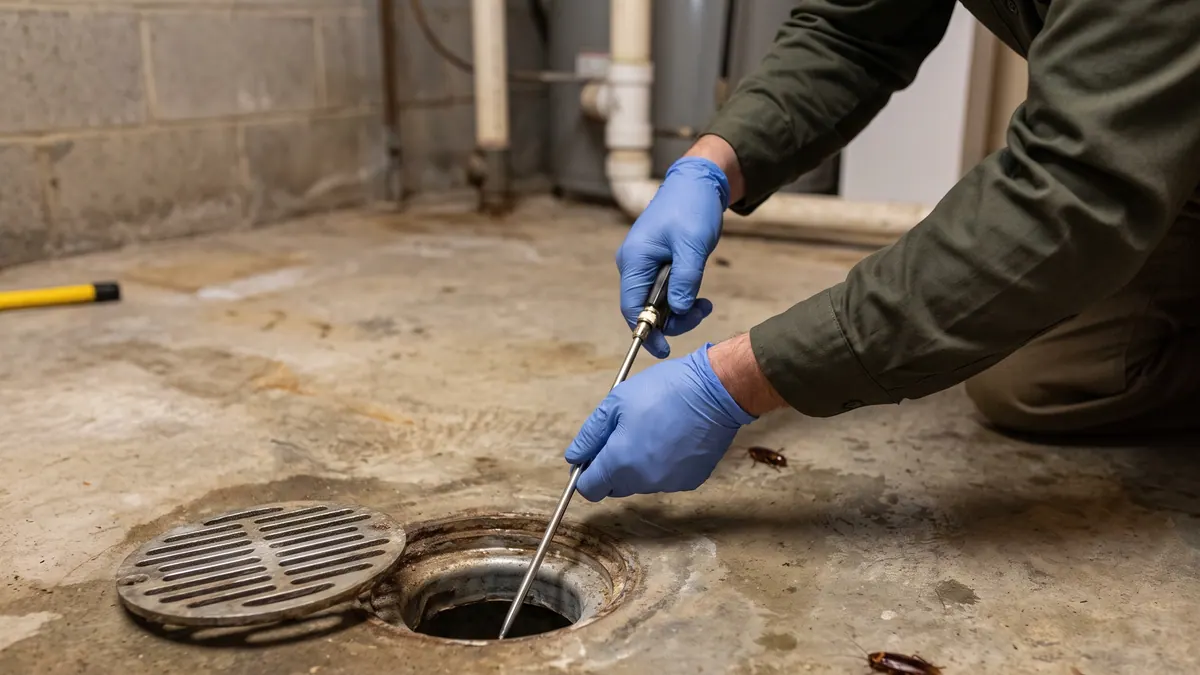
- Around pipe openings under kitchen and bathroom sinks
- Under the sink cabinet’s toe kick
- Inside the recess around a wall mounted microwave
- In and around stored cardboard
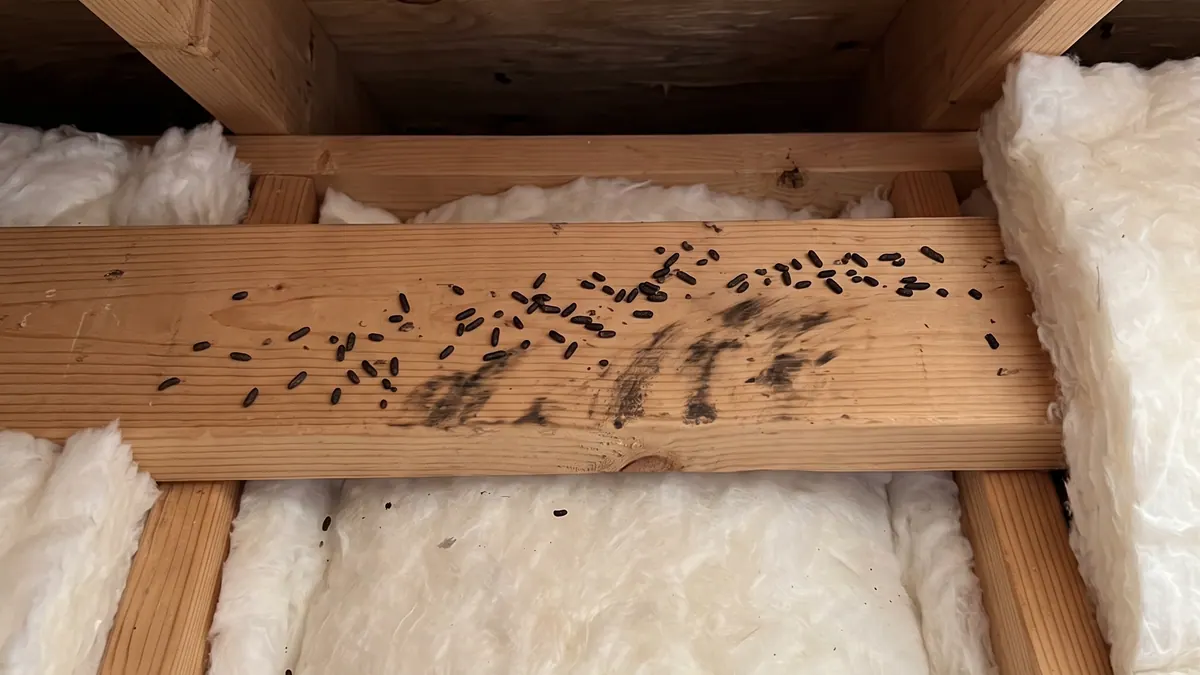
Small dark specks like ground pepper, a shed skin, or an empty egg case can all point to activity even when you see no insects.
What Does Not Work on German Cockroaches?
Knowing this may save you the most money.
- Foggers, sometimes sold as bug bombs. These fill a room with a mist that lands on open surfaces. German cockroaches are rarely on open surfaces by day, so the mist usually misses them, and it can drive them deeper into walls or into the next room.
- Spray along the baseboards. It treats a walkway, not a hiding place. It can also make roaches avoid that stretch of floor, and with it any bait placed nearby.
- Cleaning on its own. Taking away food and water is an important part of the job and can slow the numbers down. By itself it usually will not clear a settled population, because these roaches can live on very little.
- Ultrasonic plug in repellers. There is little good evidence that sound devices control cockroaches.
Does Bleach Kill Cockroaches?
Bleach can kill a cockroach you pour it directly onto, and that is about all. It leaves nothing behind for the roaches hiding in a wall, it does not reach egg cases out of sight, and mixing it with other cleaners can be dangerous. It is fine for cleaning up after roaches, but it is not a way to control them.
Many popular household remedies work the same way. They may kill a single insect on contact, but they seldom reach a population living inside a cabinet frame.
How to Get Rid of German Cockroaches Step by Step
A control plan that works usually follows the same general steps, whether you start on your own or bring in help.
- Find the hiding places. Look at night with a flashlight, and set sticky traps in cabinet corners and beside appliances to see where the roaches gather most.
- Cut off water and food. Fix drips, dry the sink at night, pick up the pet bowl, clean grease, and clear cardboard out of cabinets. This helps make bait the most attractive food around.
- Put bait where they live, in small dabs, in many spots. Gel bait placed in hinges and corners, around pipe holes, under the toe kick and in the gaps near appliances usually works better than a few large amounts, because a roach has to run into it. Follow the product label, and keep bait away from children, pets, and surfaces that touch food.
- Leave the bait alone. Bait works when cockroaches eat it. It can take several days to see results, so leave the bait undisturbed and avoid spraying over treated areas.
- Consider a growth regulator for a settled population. Insect growth regulators keep young roaches from growing into breeding adults, which may catch the batch that bait alone misses.
- Keep checking the sticky traps. They show whether the roaches are gone or whether a pocket held out. When roaches come back, it often means one hiding place was missed.
- Seal paths between rooms. Closing gaps around pipes and behind cabinets can make it harder for survivors to spread again.
A settled German cockroach population usually takes weeks to clear, and seeing a few roaches after a treatment is common. If the numbers are not dropping, a pest inspection can show where the roaches are coming from.
Can German Cockroaches Trigger Asthma and Allergies?
This part is easy to miss. Cockroach droppings, shed skins and body pieces carry allergens, and the EPA lists cockroach allergens as a trigger for asthma.
That is one reason cleaning up what roaches leave behind matters, not just removing the roaches themselves. Vacuuming and wiping the areas where they gathered can help reduce what stays in the house.
How Professional German Cockroach Control Works
Our cockroach control service starts with an inspection to find where the roaches are living and how far they have spread, and what we find shapes the treatment. It is part of our broader residential pest control.

In buildings with multiple units, cockroaches can spread from one unit to another. If they keep coming back, a pest prevention program with scheduled visits may be more effective than repeated one time treatments.
Restaurants, rental properties and other businesses bring their own concerns, such as health inspections and shared walls, and our commercial pest control covers those settings.
Rozier Pest Control & Waterproofing serves southern Virginia and northern North Carolina, including South Hill, Petersburg and Danville. If you would like someone to take a look, contact our team.
For more on how quickly a cockroach population can grow, read our earlier post on cockroach control.