
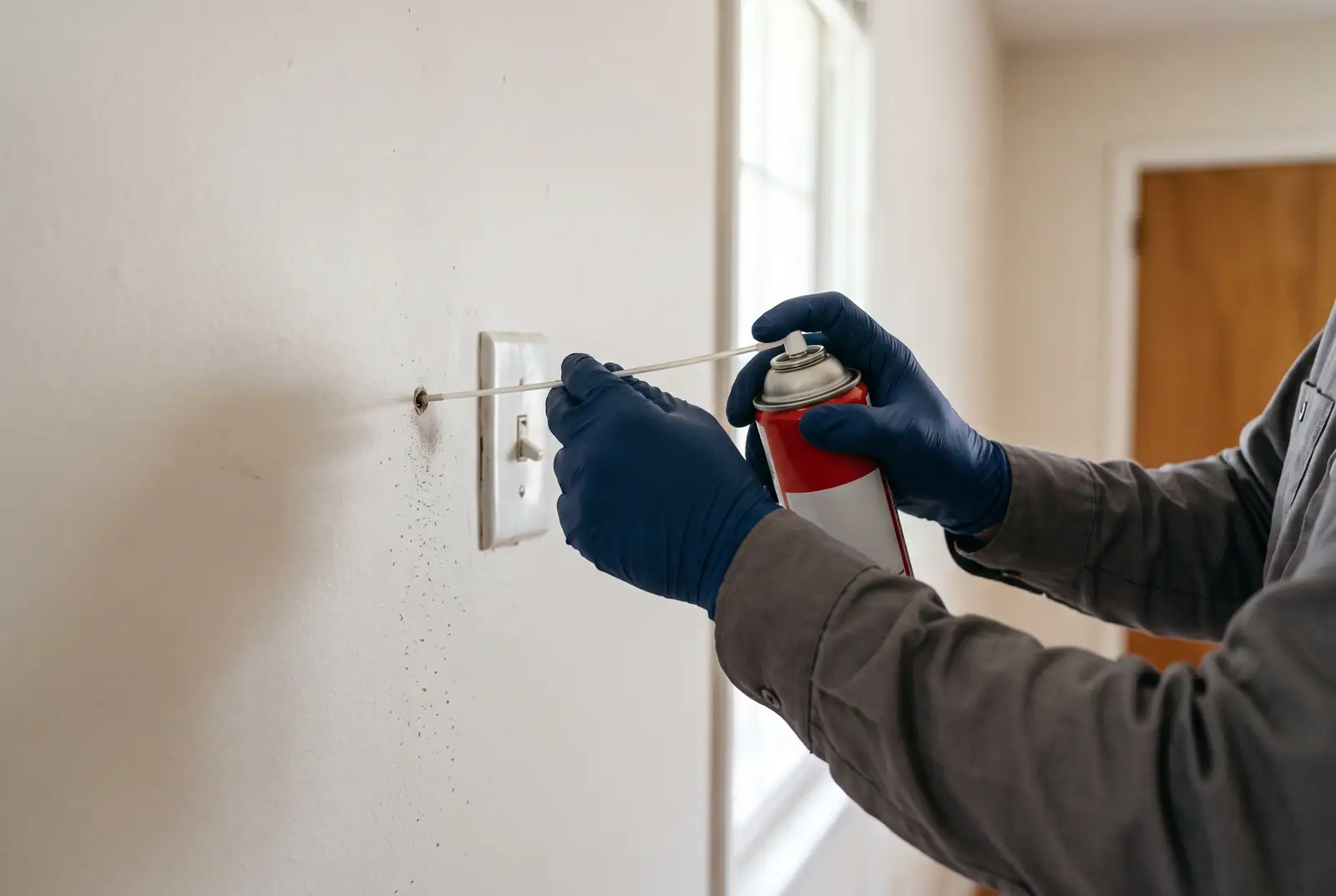
Insects Are Flying Into a Gap in the Wall
A steady line of insects into one opening means the nest is inside the structure, and that changes how it is handled.
Insects Entering a Wall Void: Diagnosed and Explained
From the yard you notice a spot on the house that insects keep going to. A gap where the siding meets the trim, a hole around a cable or pipe, a soffit vent with a bent screen, a crack at the top of a block foundation wall. Every few seconds one flies in and another flies out, on the same line, from morning until dusk. There is no nest to see. The nest is behind the wall, and the traffic is the only part of it that shows.
Several insects use voids this way. Yellow jackets are the most common, and their colonies inside a wall can grow to several thousand by late summer. European hornets, very large and sometimes called Japanese hornets by homeowners, nest in wall voids, attics and hollow trees and build very quickly. Honey bees move into wall cavities and start building comb. Even paper wasps will sometimes tuck a comb inside a soffit or behind a shutter rather than out in the open.
What makes a void nest different from a nest on the outside of the house is that the colony has room to grow out of sight and can move in more than one direction. Toward the outside is where you see it. Toward the inside is where it becomes a problem in a room. That is why what you do about the opening matters as much as what you do about the insects.
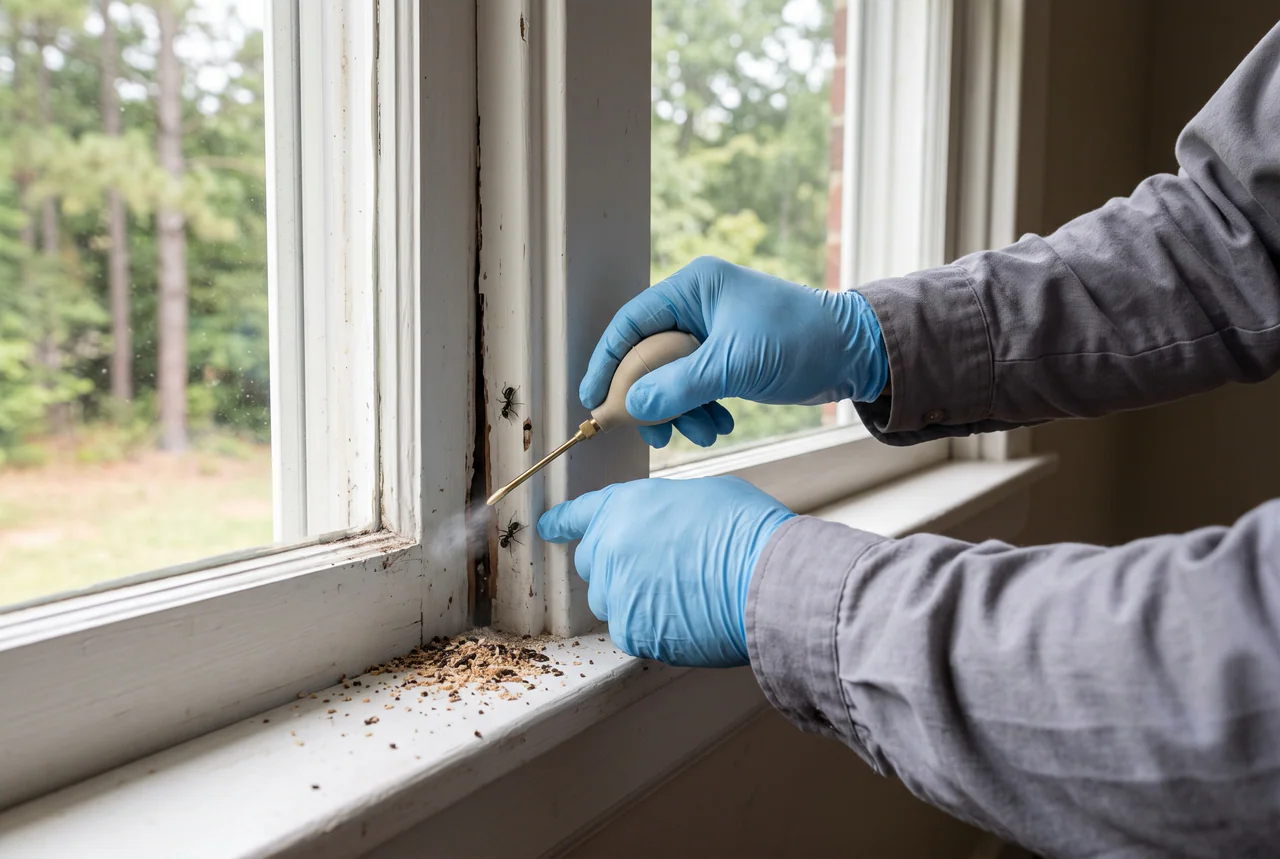
What Usually Shows Up With It
Buzzing or scratching heard through the wall or ceiling
A colony of any size is audible in a quiet room, most often in the evening when the insects have returned. Chewing sounds from European hornets or yellow jackets working on the wall material are a sign the nest is growing toward the inside.
Insects appearing inside the house
A few yellow jackets or hornets showing up in a bedroom, bathroom or attic, especially in the same room repeatedly, suggests the colony has found a path in through a light fixture, an outlet or a gap in the drywall.
A damp or stained patch on the drywall
A large nest inside a wall can leave a wet looking spot where the paper and the colony hold moisture, and honey bee comb can stain the wall as it warms and softens. A patch that grows over weeks is worth a look from inside the wall.
Traffic that increases through the summer
A few insects at an opening in June becoming a steady stream in August tracks the colony's growth. The same opening carrying traffic in the fall means the nest has reached its largest size.
Insects clustering at a light or window at night
Yellow jackets and hornets that have entered the living space are drawn to lit windows and fixtures after dark. Finding them at the same window each evening points to where the void connects to the room.
What Usually Causes It
Stinging Insect Control Solutions for Insects Entering a Wall Void
Each method is matched to what the inspection finds at your property. Read how each one works and when it is the right call.
Eave and Soffit Residual Treatment
A treated surface where wasps like to build, applied before and during the season.
Nest Treatment and Removal
The nest is treated first, then taken down once the colony has stopped moving.
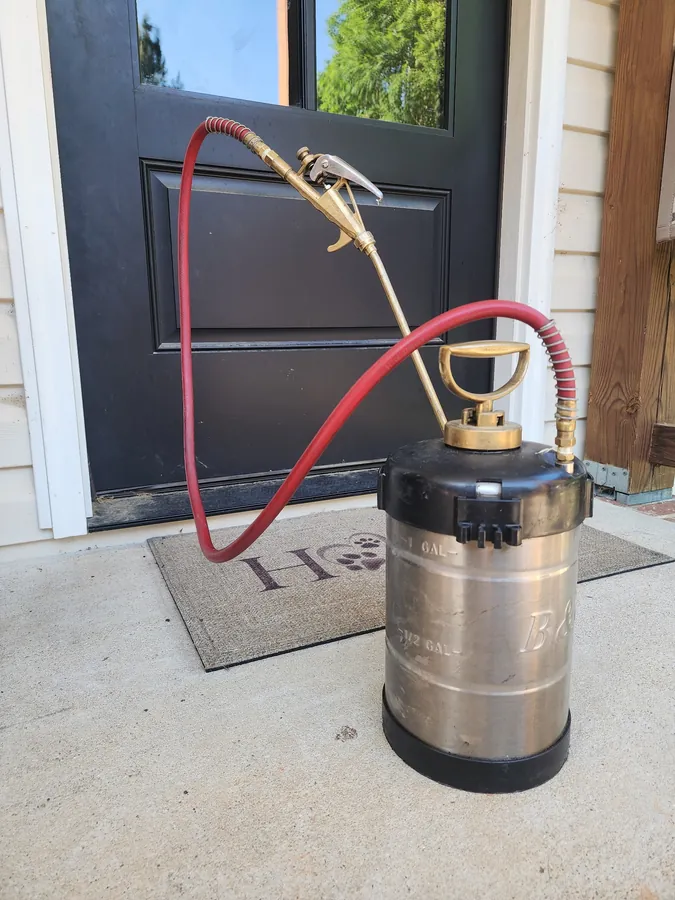
Wall Void and Attic Nest Treatment
The cavity is treated through its own opening, and the hole is never sealed first.
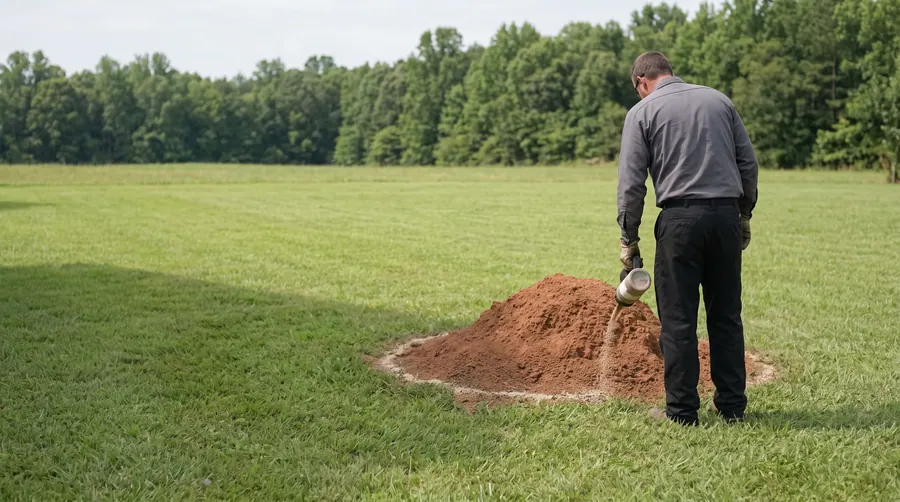
Ground Nest Treatment
Yellow jackets and cicada killers are treated at the entrance hole, where the colony comes and goes.
Why the Southern Virginia and Northern North Carolina Climate Changes This Work
Generic advice treats every market identically. Humid summers, wooded lots and a great deal of older housing stock give this region a moisture profile that drives both structural damage and pest pressure, which is why our diagnosis starts with where the home sits and how it is built, not just with the symptom you called about.
Humid summers put water under the house
For much of the year the outside air across this region holds more moisture than the air under a crawl space. That inverts the assumption foundation vents were built on. Warm, humid air enters through the vents, meets the cooler surfaces beneath the floor, and condenses on joists, ductwork and insulation. The vents intended to dry the space are wetting it instead.
That single mechanism explains most of what we are called out for. Damp framing softens and decays. Mold establishes and its odor rises into the living space through the floor. Termites, cockroaches and rodents are drawn to exactly those conditions. Treating the insects without addressing the moisture underneath simply resets the clock.
Wooded and lakeside lots hold moisture longer
Around Lake Gaston and across the forested parts of Mecklenburg, Brunswick, Warren and Halifax counties, shade and tree cover keep soil damp well after the surrounding area has dried. Standing water lingers, foundations stay wet longer after rain, and mosquito habitat persists through more of the season. Properties like these frequently need drainage attention before any treatment is worth doing.
Older housing stock, older construction details
Petersburg and Danville in particular carry a great deal of older housing, and age brings construction details that predate current moisture practice: open crawl spaces with bare soil, wood in direct contact with the ground, original drainage that has silted up, and decades of accumulated repairs. An inspection of a house like that has to read the whole system rather than one symptom.
A Local, Family Owned Team in South Hill
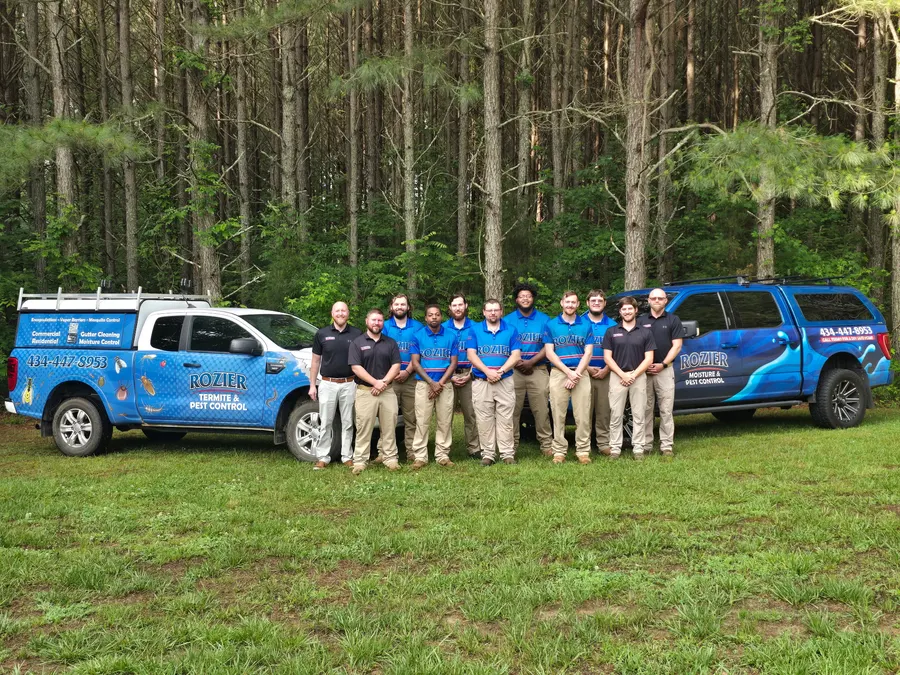
Rozier is a family owned, faith-driven company based in South Hill. Because moisture is what invites termites and rodents in the first place, real prevention starts below the surface.
We treat the infestation and correct the moisture conditions that caused it, instead of handing you to a second contractor.
Each home we visit is assessed through a pest lens and a moisture lens, because underneath a house they are the same problem.
We do not arrive with a predetermined treatment and a timer running. What we propose follows from what we find.
Children, pets and sensitive family members are part of the decision about what gets used and how it is applied.
Answers to Common Questions About Insects Entering a Wall Void
Don't see your question here? Our team is happy to help. Reach out anytime.
Other Stinging Insect Control Warning Signs to Watch For
If you see one, it is worth checking for the others. Most problems show up as more than one symptom.
Proudly Serving Southern Virginia and Northern North Carolina
Rooted in South Hill, we work across both states with the responsiveness of a local team. If your town is not listed, call us. There is a good chance we are already there.
Protection in Three Straightforward Steps
No confusing plans and no pressure. Here is exactly how we get your home protected.
Call for a free estimate.
One quick call and we schedule a visit at a time that suits you, at no cost and with no obligation to go ahead.
Get a plan built for your home.
We inspect above and below the surface, explain plainly what we found, and recommend only what your property actually needs.
We handle the work.
Our team carries out the treatment or the repair, and tells you what to expect afterwards and when we will be back.
Read What Our Neighbors Say
Verified Google reviews from homeowners throughout southern Virginia and northern North Carolina.
Expert Guidance on Protecting Your Home
Practical articles from the Rozier team on foundation health, waterproofing, and home preservation.
 Pest ControlFeatured
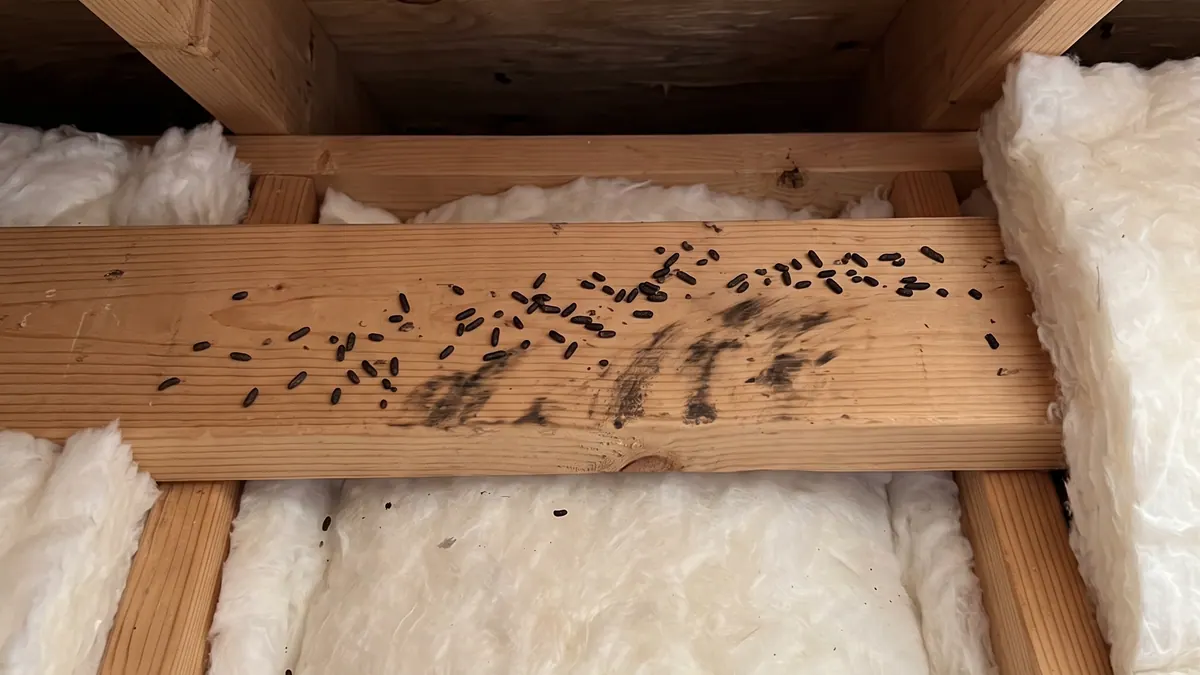
5 Tips to Avoid a Rodent Infestation
Five practical steps to keep mice and rats out: seal entry gaps, trim back vegetation, store food securely, manage trash, and dry standing water.
 Pest Control
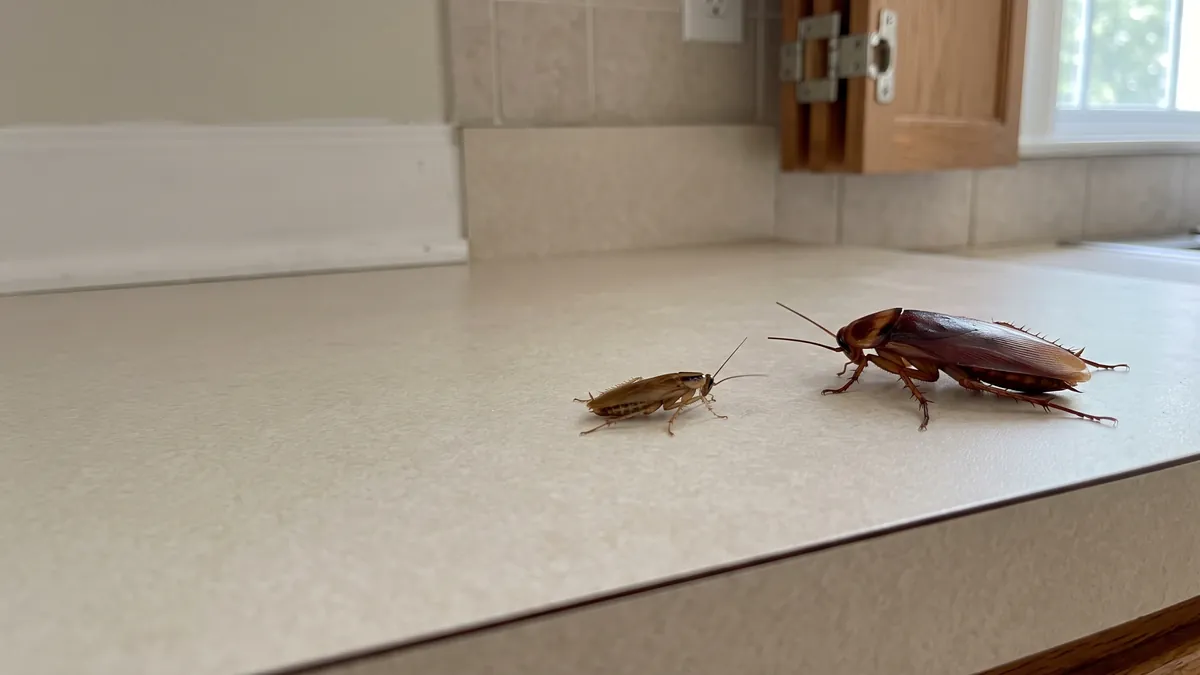
How to Get Rid of German Cockroaches
German cockroaches live indoors all year and hide in kitchen and bathroom gaps, so sprays often miss them. What usually works, and what usually does not.
 Basement Waterproofing
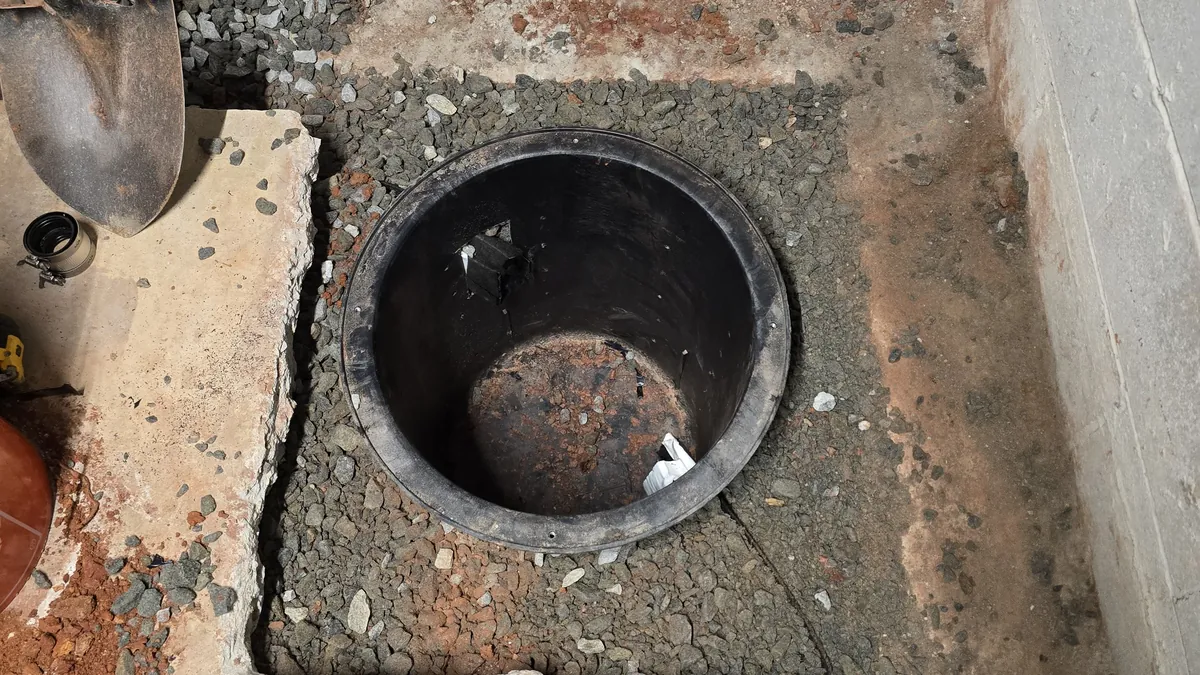
What Is a Sump Pump and How Does It Work?
A sump pump sits in a pit below the basement floor and pumps rising groundwater away from the house. How it works, the main types, and signs it may need attention.