
Mice usually get into a house through small openings near the ground: gaps around pipes and wires, damaged crawl space vents, the corners of a garage door, and the seam where the siding meets the foundation. A house mouse can fit through a gap about the width of a pencil, so a home can look sealed from the yard and still have several ways in. Most of these openings are easy to miss until you know where to look, and finding them is a large part of rodent control.
This post explains why mice tend to show up in the fall, the places they most often get in, how they move once they are inside, and how you can look for the openings yourself.
Why Do Mice Come Inside in the Fall?
Mice are looking for the same three things all year: food, water and a sheltered place to nest. In the warm months, many mice can find all three outdoors in fields, woodpiles, sheds and overgrown edges of the yard.
As nights get cooler and outdoor food becomes harder to find, those mice often move toward heated buildings. A house offers steady warmth, stored food, and quiet nesting spots inside walls, insulation and boxes. Homes near fields, woods or outbuildings often see this pattern more than homes in the middle of town, and it may repeat every year.
A clean house can still get mice. Cleanliness helps, but mice can live on very small amounts of food, and they come in for warmth and shelter as well.
How Small a Hole Can a Mouse Get Through?
A mouse needs a gap of roughly a quarter inch, about the width of a pencil. Its body is soft and flexible, and if its head fits through an opening, the rest of the mouse can usually follow.
That size matters for two reasons. First, many of the openings mice use are too small to notice from a standing position. Second, an opening that looks too tight for an animal often is not.
Rats need larger gaps than mice, and our guide to telling mice from rats explains how the two differ in size, droppings and habits.
Mice are also good climbers. They can climb rough surfaces such as brick and some siding, run along wires and pipes, and squeeze under doors. So openings higher on the house can matter too, even though most entry points are close to the ground.
Where Do Mice Usually Get Into a House?
Every house is different, but the same openings come up again and again. These are good places to check.
- Pipe and wire openings. Gaps where water lines, gas lines, cable and electrical lines, and the air conditioning lines pass through an outside wall are among the most common ways in. The hole drilled for a pipe is often larger than the pipe itself.
- Dryer and exhaust vents. A vent hood with a missing or broken flap can leave an open path into the wall.
- Garage doors. Worn rubber seals along the bottom, and the corners where the door meets the frame, often leave small gaps. An attached garage can lead mice straight into the house.
- Exterior doors. A missing door sweep or a worn threshold can leave a gap under the door that is large enough for a mouse.
- The foundation line. Gaps where the siding, brick or framing meets the foundation, and cracks in the foundation itself, can give mice a path into the walls or the crawl space.
- Crawl space vents and access doors. A vent with a bent or rusted screen, or an access door that does not close tightly, can let mice under the house.
- The roofline. Gaps at soffits, fascia, roof returns and gable vents can let mice into the attic, especially where branches or vines touch the house.
Mice can also be carried in. Firewood, boxes brought in from a shed or garage, and bags of birdseed or pet food stored outdoors can sometimes bring a mouse inside with them.
How Do Mice Get Into the Walls From the Crawl Space?
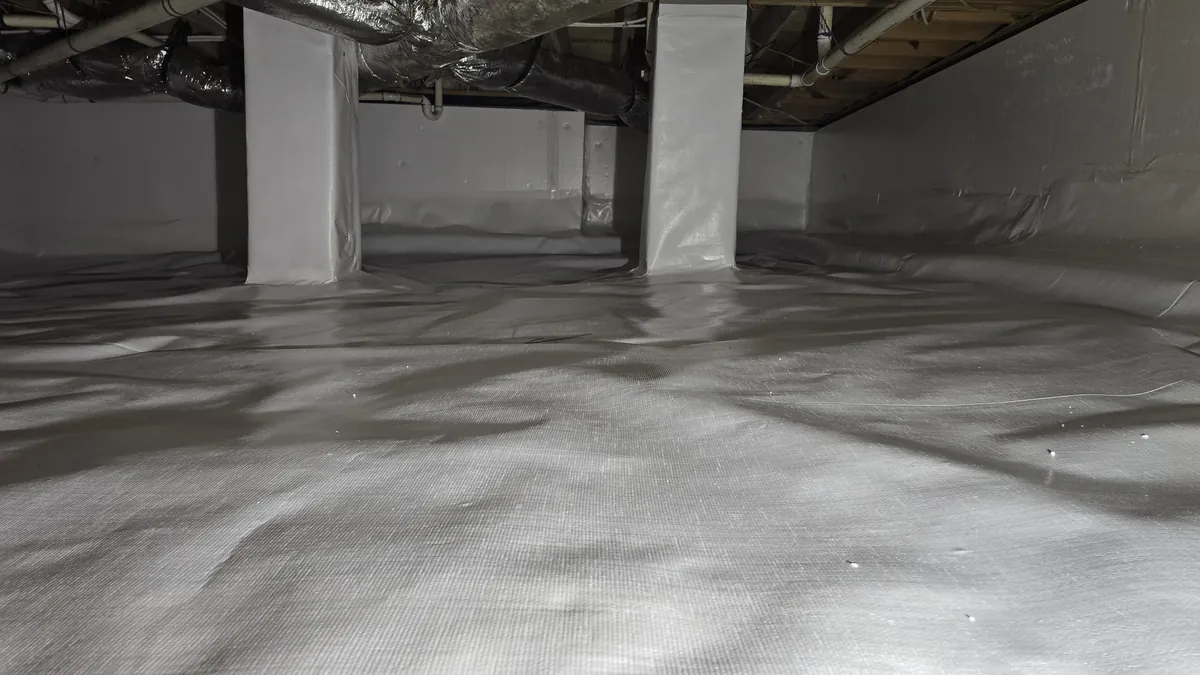
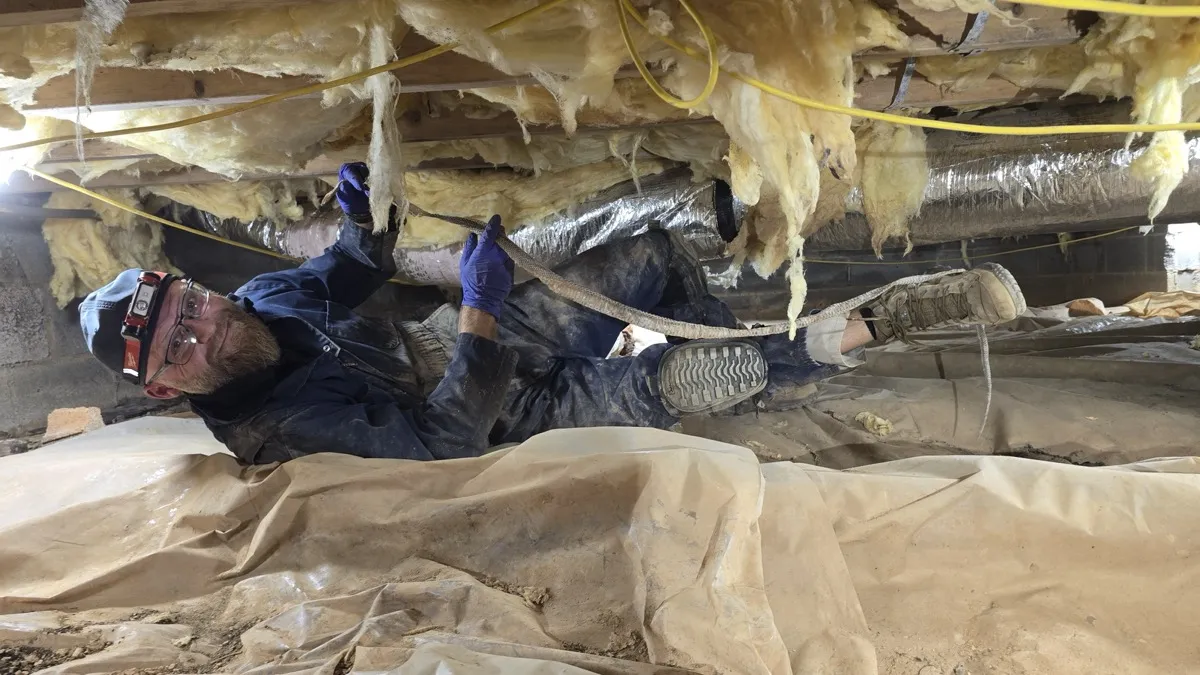
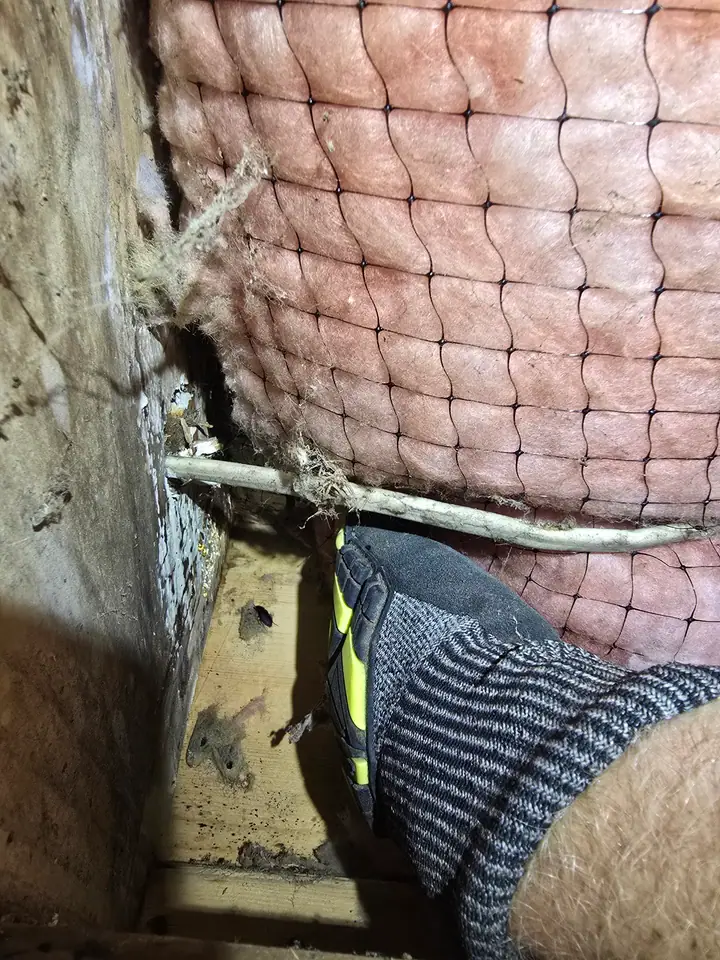
In homes built over a crawl space, mice often live under the house first. From there, they can climb up through the same openings that plumbing, wiring and ductwork use to pass through the floor. Gaps around the pipes under a kitchen or bathroom sink are a common path into the living space.
Once inside the walls, mice tend to follow pipes and wires, which give them protected routes between floors and rooms. That is one reason the kitchen and the walls behind it are often where homeowners notice activity first. A damp or open crawl space can also give mice a steady place to live below the house. Our page on crawl space repair explains how moisture problems under a house are found and corrected.
How Can You Tell Where Mice Are Getting In?
You can often narrow down the openings by following the signs mice leave behind. These checks can give you a general idea, but they may not find every opening.
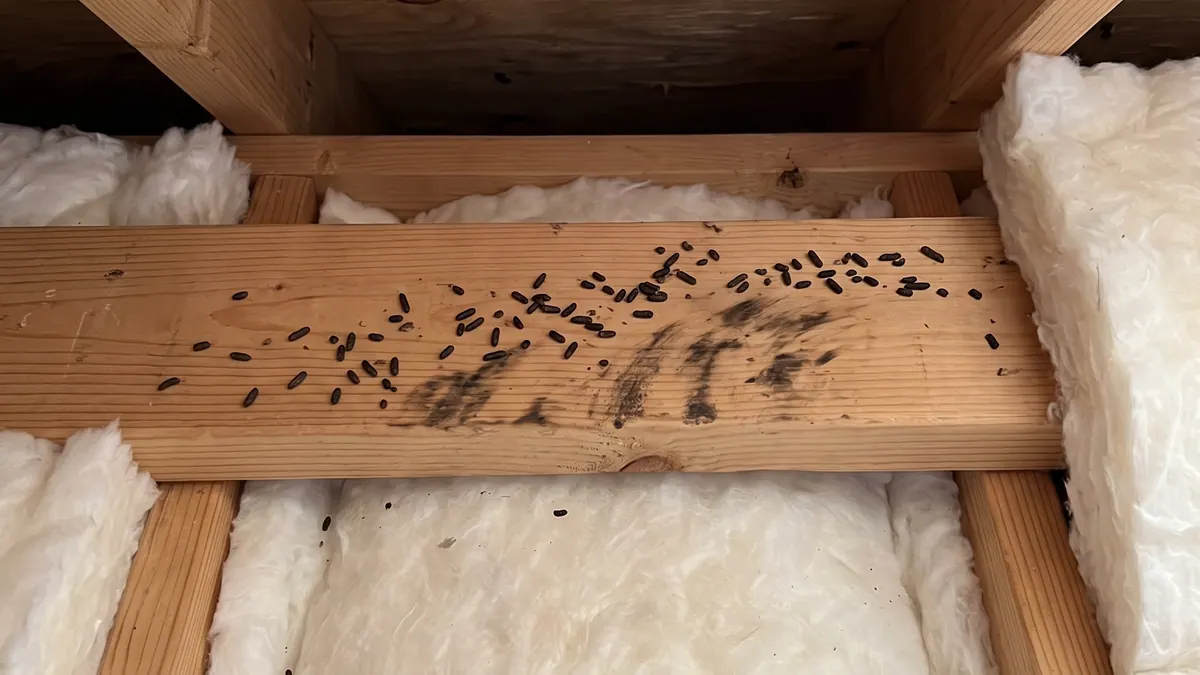
- Droppings. Mouse droppings are small and dark, about the size of a grain of rice. A cluster near a wall, under a sink, or behind an appliance can point toward a nearby route. Our page on signs of rodent activity shows what else to look for.
- Rub marks. Mice tend to travel along the same edges, and the oil and dirt on their fur can leave faint gray smudges along baseboards, pipes and the edges of openings.
- Gnaw marks. Fresh chewing around the edge of a hole, a door corner or a vent can show that mice are using it.
- Sounds. Light scratching in the walls at night may suggest mice are traveling along a wall or ceiling. Noting where the sound starts can help.
- Light from outside. In a garage or crawl space during the day, a gap where daylight shows through may be an opening worth checking.
Start outside at ground level, walk the full outline of the house, and pay close attention to every place a pipe, wire or vent passes through the wall.
Can You Seal Mouse Entry Points Yourself?
Some openings are easy for a homeowner to close, such as adding a door sweep, replacing a worn garage door seal, or repairing a damaged vent hood. Our earlier post on keeping rodents out covers simple habits around the yard and kitchen that can also help.
The material you use matters. Mice can chew through soft materials, so expanding foam or caulk used on its own may not hold up in an opening they are already using. Durable materials such as hardware cloth, metal flashing, sheet metal or mortar are more commonly used to close those gaps. Follow the product directions, and take care around electrical lines, gas lines and vents that need airflow.
There are a few limits to keep in mind.
- Sealing does not remove mice already inside. If mice are living in the walls, closing every opening may trap them indoors. The mice inside usually need to be addressed at the same time.
- The obvious gap is not always the one in use. A house often has several openings, and closing one may simply move the traffic to another.
- Some openings are hard to reach. Gaps at the roofline or deep inside a crawl space can be difficult and unsafe to reach without the right equipment.
If you find droppings while you look, the CDC advises against sweeping or vacuuming them dry. Its guidance is to wear gloves, spray the droppings with a disinfectant or a bleach solution, let them soak, and then wipe them up with paper towels.
How Does Professional Mouse Exclusion Work?
Our mouse control service starts with an inspection that follows the droppings, rub marks and gnaw marks back toward the openings mice are using. What the inspection finds shapes the plan.
One time rodent exclusion focuses on sealing the openings with materials a mouse cannot chew through. Where mice are already living inside, we usually recommend pairing that work with a way to reduce the population indoors, because sealing alone may not solve the problem.
Rozier Pest Control & Waterproofing serves homes across southern Virginia and northern North Carolina, including South Hill, Petersburg and Danville. If you are hearing or seeing signs of mice and would like someone to take a look, contact our team.